1. Read three treatment roles, not a universal process
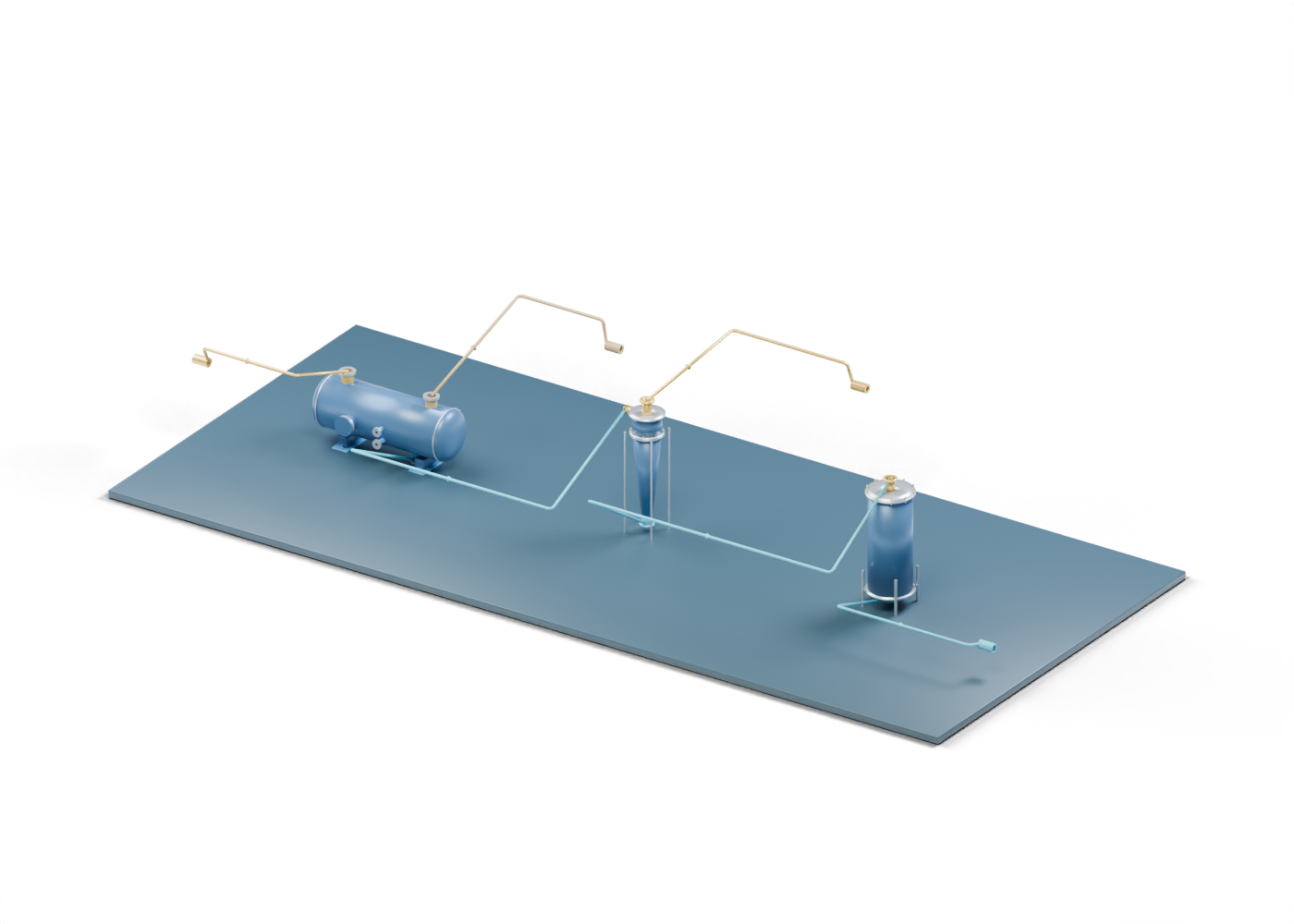
Produced water is a question about both the fluid and its intended destination. An EPA treatment overview describes separation, hydrocyclone and polishing as distinct roles; it does not make one lineup suitable for every field. Our original 3D produced-water scene places a free-water knockout, a deoiling hydrocyclone and a nutshell-media filter together so you can compare those roles. The six colored connections show a possible teaching relationship, not installed piping, a selected plant or a measured flow.
2. Separate the first water draw from the emulsion exit
Start at the mixed-liquid arrival and inspect the free-water knockout shell. The vessel has a separate free-water draw and an oil-and-gas emulsion exit. Follow the emulsion route only as far as its open edge. It does not become treated water or a completed oil-and-gas handling system.
The visible vessel boundaries establish where the two outlet questions differ. They do not report an interface level, composition, separation efficiency or actual facility operation. The independent knockout explorer lets you inspect its wall and collars separately.
3. Compare the deoiling cyclone's two outlets
The water relationship reaches a separate hydrocyclone illustration. SLB's deoiling overview distinguishes a water-rich outlet from an oil-rich reject. In our model, the offset feed, upper reject and lower water outlet are independently selectable. The reject boundary makes its separate handling question explicit.
The colored lines do not calculate droplet removal, pressure, reject ratio or downstream quality. Open the standalone hydrocyclone for its hollow internal geometry before comparing a real supplier claim against its stated conditions.
4. Treat polishing as another testable role
The cyclone-to-filter route leads to a separate filter model. The SLB nutshell-media overview describes an oil-and-solids polishing role. Here, one media teaching sector and the lower outlet are visible parts. Their shape does not specify media grade, loading, backwash handling, removal efficiency or outlet concentration. The independent filter explorer exposes those component positions in more detail.
5. Stop before claiming a destination
The filtered-water route ends at an open boundary. Sampling results, project-specific water specifications and the intended destination would have to come from real records. The Alberta Energy Regulator's Class II disposal page explains that produced-water disposal through a Class II scheme requires approval. This drawing provides neither an approval nor evidence that the water is fit for reuse, injection, disposal or environmental release.
| Visible cue | Useful question for a real facility | Still missing |
|---|---|---|
| Free-water draw | What fluid and measurement period feed the actual vessel? | Composition, interface and separation result |
| Hydrocyclone reject | Where does the oil-rich side stream go? | Reject quantity and handling evidence |
| Filter bed role | What inlet and outlet samples support polishing claims? | Media selection, performance and cleaning evidence |
| Open final water boundary | Which destination and approval apply? | Water-quality and site-specific authorization |
6. Use the model beside reporting
Open the complete interactive scene, select one route at a time, then return to the article or report you are reading. Ask for the named facility, dated source, fluid measurements and the approval relevant to its actual destination. A compelling render can clarify equipment vocabulary; it cannot substitute for those records.