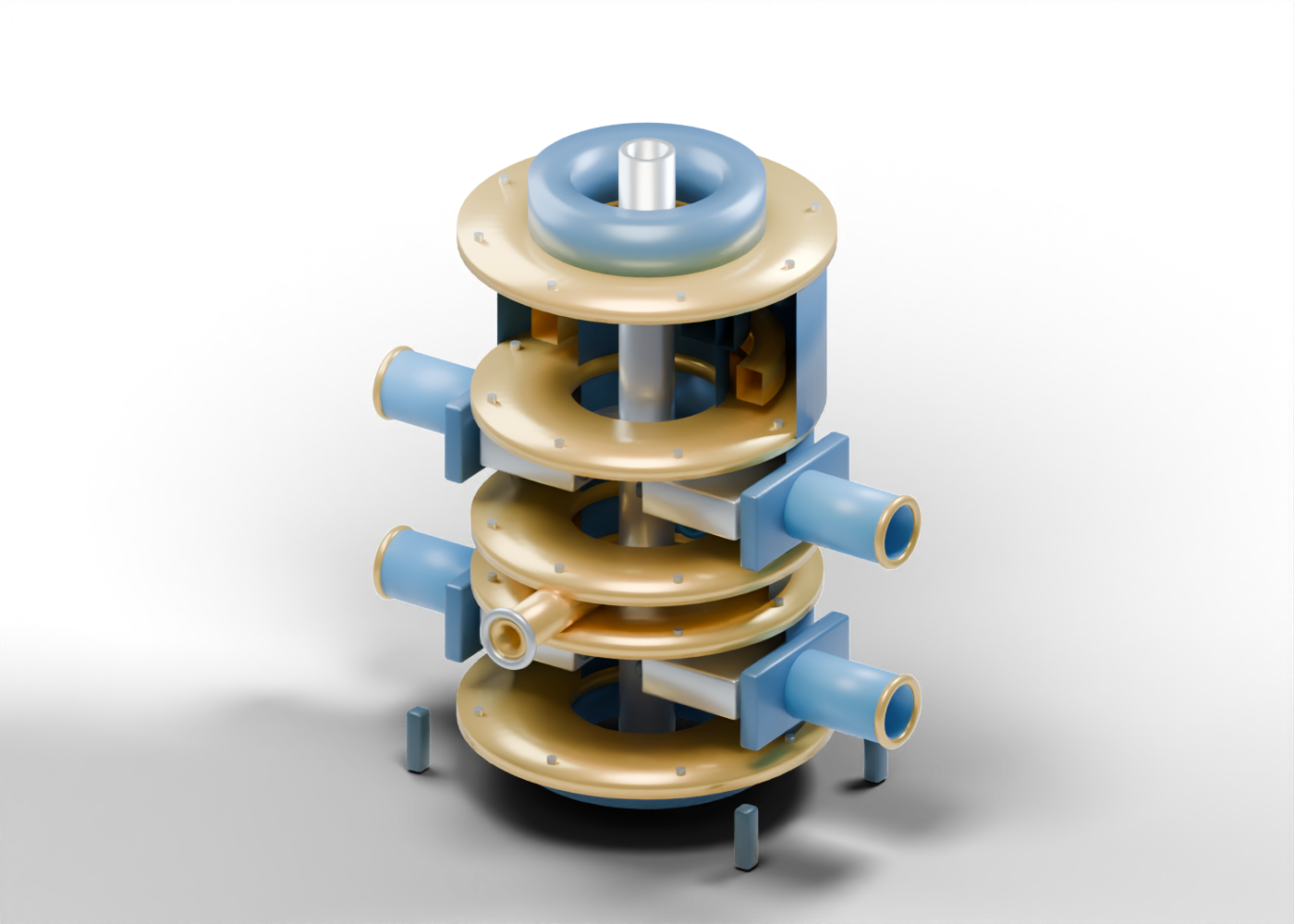
1. Read a stack as different preventer roles
The SLB Energy Glossary describes a BOP stack as multiple preventer units, commonly with an annular unit above ram units. Our original 87-part surface-stack explorer lets you look through separate component regions. It is an invented static arrangement, not a named rig, a pressure-rated product or an Alberta well-control plan. Begin at the open lower connector and locate the separate hollow drillpipe running through the centre.
2. Compare the annular element with the pipe
The upper annular body surrounds a separate packing ring. The SLB annular-preventer definition explains the broad role of an element squeezed inward around pipe or an open wellbore. In this illustration the ring is uncompressed and clear of the pipe. The piston-region marker identifies a component location, not hydraulic actuation, a closing force or seal contact.
3. Inspect two notched pipe rams
Below it, the pipe-ram body has its own central opening. The left pipe-ram block and right pipe-ram block each have a real semicircular notch but remain apart in this static view. The SLB pipe-ram definition explains why a real pipe ram must match a tubular size or limited range. Our face-seal marker and rod marker are separate selectable parts. The actuator envelope contains no working hydraulic circuit. Visible notches cannot prove fit, sealing or motion.
4. Keep flat blind rams separate from pipe rams
In the lower blind-ram body, the left blind block and right blind block have flat faces and no pipe opening. They are drawn retracted while the pipe passes through the stack. The SLB blind-ram definition distinguishes closing across a bore without drillstring from closing around pipe. Neither block in this illustration is a shear ram, and this static scene demonstrates no closure event.
5. Stop at the open side outlets
The spool wall contains two actual radial openings. A choke-side open nozzle and kill-side open nozzle mark unresolved side boundaries. The joint-location ring and its smooth stud markers help orient the stack but do not define a rated connection.
| Visible part | Question it helps ask | Evidence still needed |
|---|---|---|
| Annular ring | What sealing element is installed? | Selected equipment, tests and condition |
| Notched pipe rams | Which tubular can the actual rams fit? | Pipe and ram specifications |
| Flat blind rams | Is the real bore empty when used? | Actual configuration and well-control records |
| Side outlets | What complete line-up is installed? | Valves, manifold, controls and pressure tests |
6. Return to the Alberta record
The Alberta Energy Regulator's Directive 036 page identifies the province's drilling blowout-prevention requirements and procedures. Use the interactive stack to learn the component vocabulary, then assess any claim using the current directive, a named well's approved program, installed-equipment records and qualified personnel. This illustration cannot establish regulatory compliance, pressure integrity, a shut-in method or safe operation. The separate drilling-fluid circulation map covers pump, well and return roles without connecting a selected BOP stack.